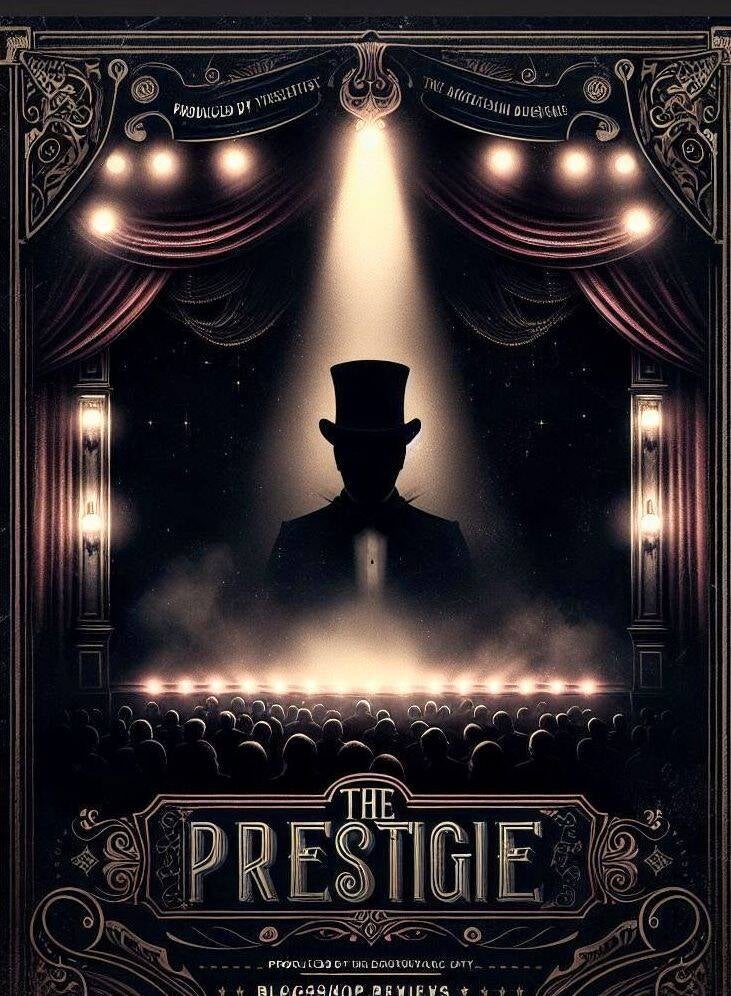
It's been years since The Prestige first graced the silver screen, yet Christopher Nolan's meticulously crafted tale of rivalry, obsession, and the dark heart of showmanship remains as sharp and confounding today as it was upon its release. For those who appreciate a narrative puzzle box that rewards careful attention, this is a film that demands to be revisited.
Set in the gaslit elegance of late 19th-century London, the film plunges us into the world of stage magic, following two rising illusionists, Robert Angier and Alfred Borden. Once colleagues, a tragic accident sets them on a collision course, transforming their professional competition into a consuming, destructive personal war.
The Art of Misdirection: Plot and Direction
The plot of The Prestige is, fittingly, structured like a magic trick itself—a three-act structure Nolan defines as “The Pledge, The Turn, and The Prestige”. The narrative is deliberately fragmented, jumping across timelines and incorporating journal entries, forcing the audience to actively piece together the truth. This technique, masterfully executed by director Christopher Nolan, transforms the viewer from a passive observer into a detective.
Nolan's direction is taut and confident, maintaining a relentless pace that propels the story toward its thrilling, unsettling conclusion. He manages to balance the grand scale of period drama with the intimate, psychological intensity of the characters' escalating madness. The film is a clear precursor to his later complex works, showcasing his signature non-linear storytelling and thematic preoccupation with sacrifice and identity.
The Cast and Thematic Depth
The film is anchored by stellar performances. Hugh Jackman as Robert Angier is excellent, portraying the charismatic showman whose initial vanity curdles into a ruthless, almost tragic obsession. Opposite him, Christian Bale delivers an equally compelling, grounded performance as Alfred Borden, the working-class magician whose genius is matched only by his secretiveness. Their dynamic is the engine of the film, and the supporting cast—including a compelling Scarlett Johansson and an eccentric David Bowie as Nikola Tesla—further enriches the narrative tapestry.
The main themes explored here are universal and deeply resonant: obsession, sacrifice, and the true cost of greatness. The film asks pointed questions about the nature of art and illusion—how far is one willing to go for a secret that will astonish the audience? The answer, in Nolan's world, is disturbingly far. The overall emotional impact is one of intellectual satisfaction mixed with profound melancholy.
Critical Strengths
The film’s greatest strength is its ability to tie its complex structure directly to its thematic core; the act of watching is the act of being deceived, mirroring the audience’s role in a magic show. The period production design and stunning cinematography by Wally Pfister are also significant highlights.
A Balanced Critique: The Few Flaws
While The Prestige is often hailed as one of the best period thrillers, it is not without its minor imperfections. In the spirit of a balanced critique, a few elements occasionally strain the suspension of disbelief or feel slightly underserved:
The Overly Complex Structure: While mostly a strength, the constant narrative jumping can, at times, make the film feel a little cold or overly academic. It demands a level of attention that might occasionally prioritize mechanics over immediate emotional connection.
The Under-utilization of Supporting Characters: While the leads shine, some fascinating supporting characters, particularly those played by Michael Caine and Scarlett Johansson, occasionally feel more like plot devices than fully realized people in the latter half of the story.
A Sudden Shift in Tone: There is a specific narrative device introduced in the final act which, for some viewers, momentarily shifts the movie’s tone from a gritty, psychological period piece into a more fantastical realm. This is integral to the plot, but its introduction is somewhat abrupt.
Box Office Reception vs. Critical Acclaim: Though a financial success and a critical darling, the film didn't quite reach the mass commercial success of Nolan's later films, perhaps due to its refusal to offer easy answers. The domestic box office data reflects this comparative restraint.
The Final Verdict
The Prestige is a magnificent piece of filmmaking—a smart, stylish, and deeply unsettling look at the dark side of ambition. It's a film that demands to be studied, and its layers of misdirection ensure that every viewing reveals a new truth. If you appreciate a story where the mystery is more important than the solution, Nolan's masterpiece is an essential watch.
What are your thoughts on The Prestige? Which magic trick did you find the most baffling?
Add comment
Comments